
Table of Contents
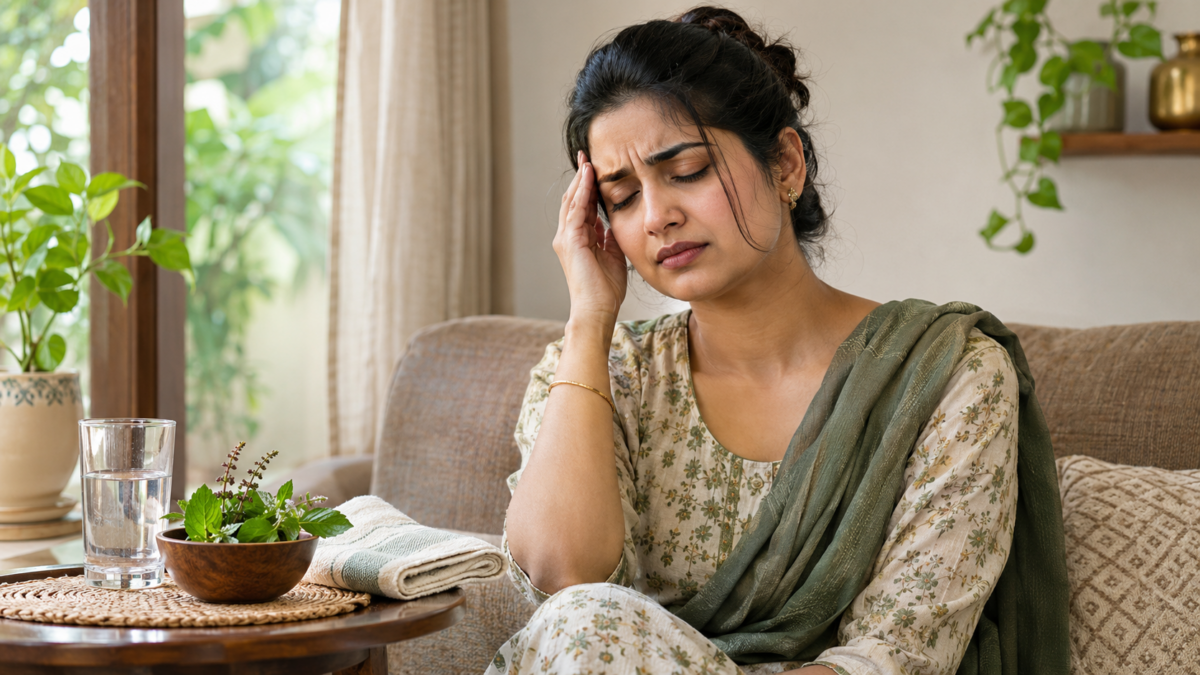
Migraine in Women: Migraine is a neurological condition that can cause intense headaches, nausea, fatigue and sensitivity to light and sound. Although migraine affects both men and women, women are nearly three times more likely to experience it. Hormonal fluctuations, stress, irregular sleeping patterns and lifestyle factors can contribute to frequent migraine attacks. American Migraine Foundation
Understanding the causes of migraine in women and adopting Ayurveda-inspired lifestyle practices may help manage symptoms and improve overall well-being.
Why Is Migraine More Common in Women?
1. Hormonal Changes
Fluctuations in estrogen levels are a major migraine trigger. Hormonal changes during menstruation, pregnancy and menopause can influence the frequency and intensity of migraine attacks.
2. Menstrual Cycle
A sudden decline in estrogen before menstruation can trigger severe headaches. This condition is known as menstrual migraine.
3. Stress and Anxiety
Professional responsibilities, personal commitments and emotional stress can increase susceptibility to migraine attacks.

4. Lack of Sleep
Irregular sleeping schedules, insufficient rest and poor sleep quality may trigger headaches and fatigue.
5. Dehydration and Irregular Eating Habits
Skipping meals, drinking insufficient water and consuming excessive caffeine can increase the likelihood of migraine attacks.
Common Symptoms of Migraine in Women
- Severe or throbbing headache
- Sensitivity to light and sound
- Nausea and vomiting
- Dizziness and fatigue
- Blurred vision or flashing lights
- Difficulty concentrating
Migraine attacks can last between four and 72 hours. NHS
7 Ayurvedic Care Tips for Migraine in Women
1. Maintain a Regular Daily Routine
Ayurveda emphasises a disciplined daily routine called Dinacharya. Eating meals and sleeping at consistent times may help reduce common migraine triggers.
2. Gentle Head Massage
Gently massaging the scalp with coconut oil or sesame oil may promote relaxation and reduce muscle tension. Avoid massage if it increases discomfort during an attack.
3. Practise Yoga and Pranayama
Gentle yoga and breathing exercises may help manage stress and support migraine prevention.

Consider practising.
- Anulom Vilom
- Bhramari Pranayama
- Shavasana
- Gentle meditation
Research suggests that yoga may help reduce migraine frequency and intensity, although more studies are needed. NCCIH
4. Stay Hydrated
Drink sufficient water throughout the day. Dehydration is a common headache trigger, particularly during hot weather or periods of physical activity.
5. Follow a Balanced Diet
Include fresh fruits, green vegetables, whole grains and nutritious homemade meals in your daily diet. Avoid skipping meals and identify foods that personally trigger your migraines.
6. Use a Cold Compress
During a migraine attack, place a cold compress on your forehead and rest in a quiet, dark room. This may provide temporary relief from discomfort.
7. Get Adequate Sleep
Aim for seven to nine hours of quality sleep every night. Reduce screen time before bedtime and maintain a peaceful sleeping environment.

When Should You Consult a Doctor?
Seek medical attention if migraines become frequent, severe or interfere with daily activities. A sudden extreme headache, loss of vision, weakness or difficulty speaking requires emergency medical attention.
Women experiencing severe headaches during pregnancy should seek immediate medical advice.
Ayurvedic herbal medicines should only be taken after consulting a qualified healthcare professional, especially during pregnancy or breastfeeding. Scientific evidence supporting Ayurvedic medicines for migraine remains limited.
Conclusion
Migraine in women is often associated with hormonal changes, stress and lifestyle-related triggers. Healthy eating habits, adequate sleep, yoga, meditation and Ayurveda-inspired self-care may support migraine management. However, these practices should complement appropriate medical treatment rather than replace it.
(Disclaimer: The information given here is based on general information. Before adopting it, definitely take medical advice. THE MONK does not confirm this.)