Table of Contents
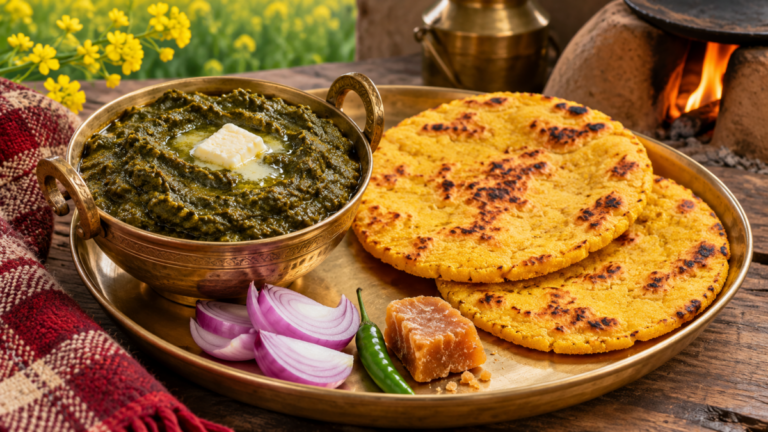
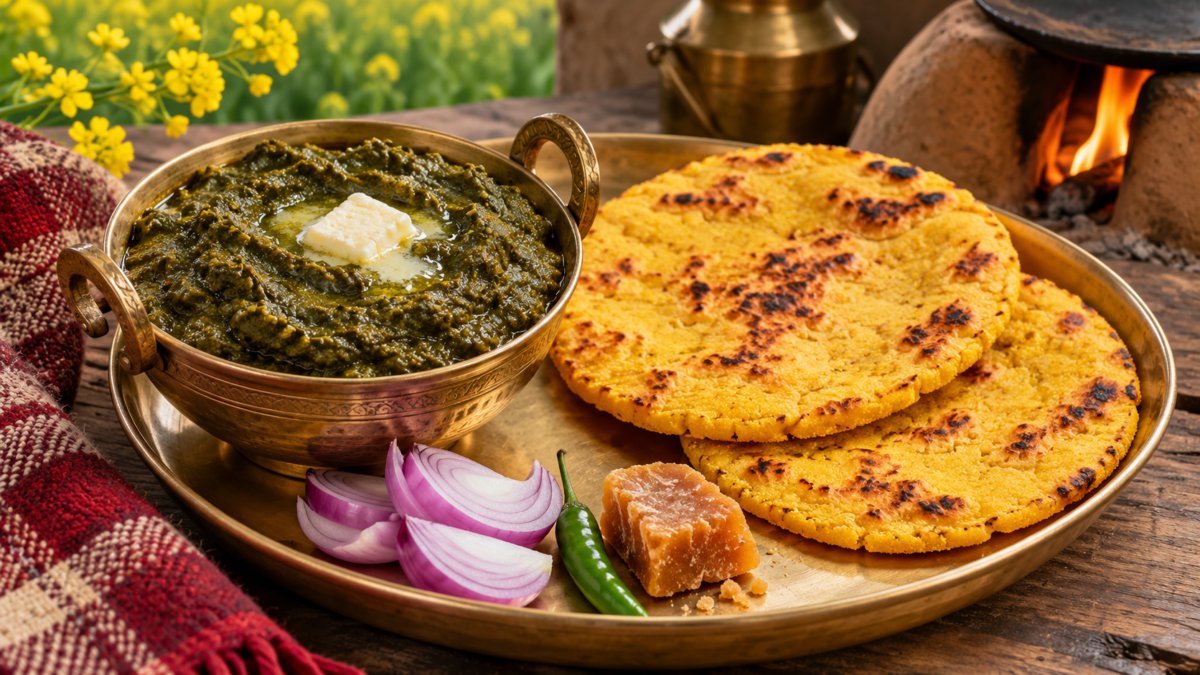
Sarson Ka Saag and Makki Ki Roti: Winter in Punjab feels incomplete without a delicious plate of Sarson Ka Saag and Makki Ki Roti. Served with homemade white butter, jaggery, and a glass of lassi, this traditional combination offers a comforting experience during chilly winter days.
From the mustard fields of Punjab to traditional village kitchens, this iconic meal represents the rich culinary heritage of northern India.
Why Sarson Ka Saag and Makki Ki Roti Is a Winter Favourite
Sarson ka saag is prepared using fresh mustard greens, spinach, and bathua leaves. These vegetables become widely available during winter, making the dish a seasonal favourite.
Makki ki roti, prepared using yellow maize flour, perfectly complements the earthy flavour of mustard greens. Together, they create a delicious and nourishing traditional meal.
Ingredients Required for Sarson Ka Saag
- 500 grams of mustard leaves
- 250 grams of spinach
- 200 grams of bathua leaves
- 2 green chillies
- 1-inch piece of ginger
- 6 garlic cloves
- 1 finely chopped onion
- 2 tablespoons of maize flour
- 2 tablespoons of desi ghee
- Salt according to taste
- Water as required
- Homemade white butter for serving
Ingredients Required for Makki Ki Roti
- 2 cups of maize flour
- Warm water as required
- Half a teaspoon of salt
- Desi ghee for cooking
How to Make Sarson Ka Saag and Makki Ki Roti in 7 Easy Steps
Step 1: Wash and Prepare the Green Leaves
Wash mustard leaves, spinach, and bathua thoroughly with clean water to remove dirt. Remove tough stems and roughly chop the leaves.

Step 2: Cook the Mustard Greens
Add the chopped vegetables, ginger, green chillies, garlic, salt, and a little water to a large cooking pot.
Cover and cook for approximately 30–40 minutes on medium-low heat until the leaves become completely tender.
Step 3: Blend and Thicken the Saag
Allow the cooked vegetables to cool slightly. Mash them using a traditional wooden hand blender or pulse them briefly in a mixer.
Add two tablespoons of maize flour and cook on low heat for another 15–20 minutes, stirring regularly.
Step 4: Prepare the Traditional Punjabi Tadka
Heat desi ghee in a separate pan. Add chopped garlic and onion, and sauté until golden.
Pour the aromatic tempering into the cooked saag and mix well. Allow it to simmer for another few minutes.

Step 5: Prepare the Makki Ki Roti Dough
Take maize flour in a large bowl and add salt. Gradually add warm water and knead until a soft dough forms.
Since maize flour does not contain gluten, prepare the rotis immediately after kneading.
Step 6: Shape and Cook the Roti
Divide the dough into small portions. Gently flatten each portion using your palms or between two sheets of food-safe parchment.
Place the roti on a heated tawa and cook both sides until golden-brown spots appear. Apply a little desi ghee for extra flavour.
Step 7: Serve Hot with White Butter
Serve freshly prepared Sarson Ka Saag and Makki Ki Roti with homemade white butter, jaggery, sliced onions, and green chillies.

Health Benefits of Sarson Ka Saag and Makki Ki Roti
1. Rich in Dietary Fiber
Mustard greens and maize flour contain dietary fiber, which supports healthy digestion and regular bowel movements.
2. Supports a Healthy Immune System
Mustard greens provide vitamins and antioxidants that support normal immune function.
3. Provides Natural Energy
Maize flour contains carbohydrates that provide energy for everyday activities.
4. Supports Bone Health
Leafy green vegetables provide vitamin K and other nutrients that contribute to maintaining healthy bones.
5. Naturally Gluten-Free
Makki ki roti made entirely from pure maize flour is naturally gluten-free, provided there is no cross-contamination with wheat.
Tips to Make the Perfect Punjabi Saag
- Always use fresh seasonal green vegetables.
- Add spinach to balance the natural bitterness of mustard leaves.
- Avoid blending the saag too finely to retain its traditional texture.
- Cook the saag slowly for a richer flavour.
- Use warm water when preparing maize flour dough.
- Serve with white butter and jaggery for an authentic Punjabi experience.
Conclusion
Sarson Ka Saag and Makki Ki Roti is more than just a winter recipe. It is a celebration of Punjab’s traditional food, seasonal ingredients, and cultural heritage.

With its rich flavours and nutritional value, this classic Punjabi combination deserves a special place on your winter dining table.