Table of Contents
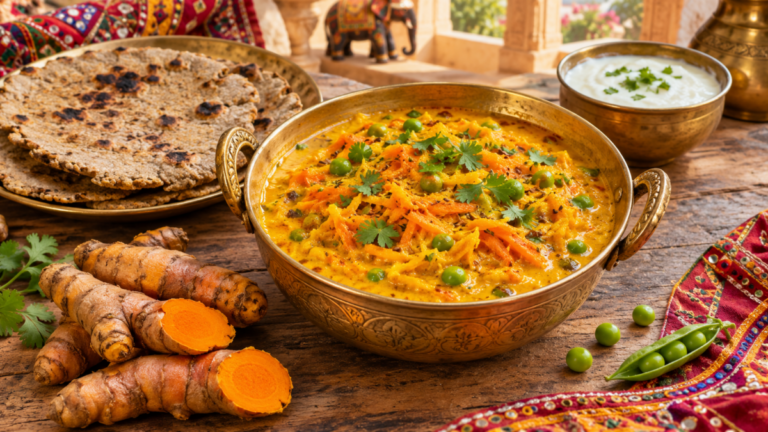
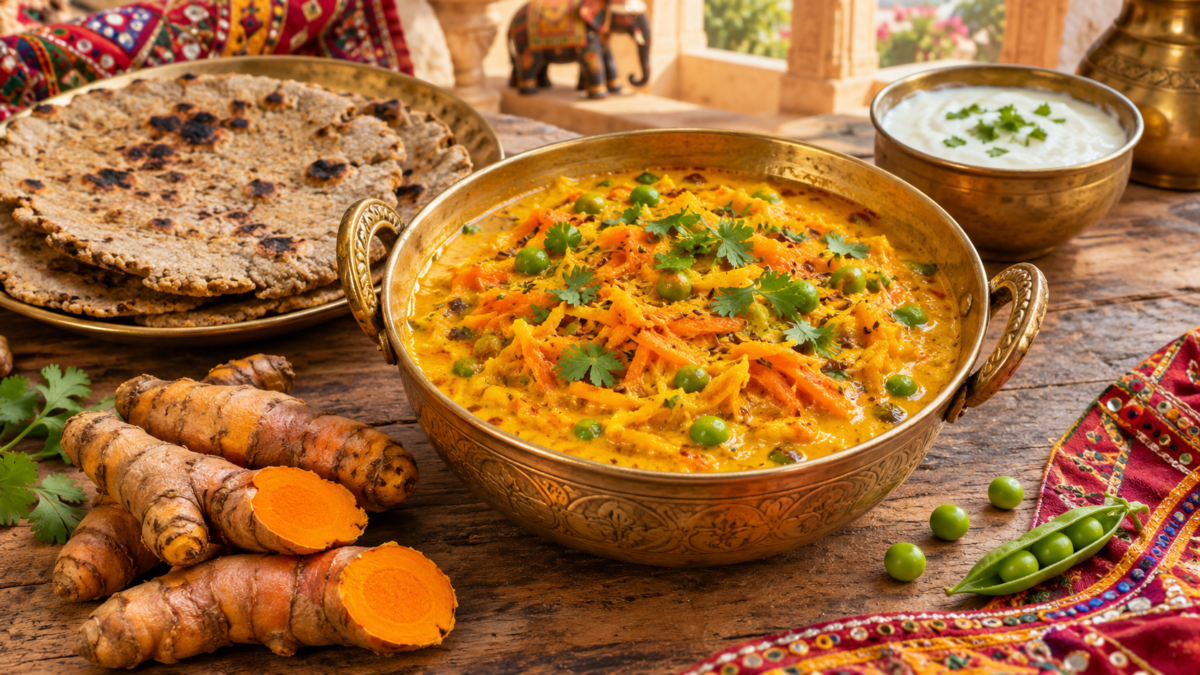
Fresh Turmeric Curry: Winter is the perfect season to explore traditional Indian recipes made with fresh seasonal ingredients. One such delightful dish is Fresh Turmeric Curry, a traditional Rajasthani delicacy prepared using fresh turmeric roots, desi ghee, yogurt, green peas, and aromatic spices.
Unlike regular vegetable curries, this golden-coloured dish features turmeric as its main ingredient rather than just a seasoning. Its unique earthy flavour and creamy texture make it a special addition to winter meals.
What Is Fresh Turmeric Curry?
Fresh Turmeric Curry is a traditional winter dish popular in Rajasthan, particularly in the Marwar region. Fresh turmeric roots are gently roasted in desi ghee and cooked with yogurt and spices to balance their naturally bitter taste.
This delicious curry is traditionally enjoyed with bajra roti, wheat chapati, or parathas.
Ingredients Required for Fresh Turmeric Curry
- 200 grams fresh turmeric roots
- 1 cup fresh yogurt
- Half a cup of green peas
- 5 tablespoons desi ghee
- 1 teaspoon cumin seeds
- A pinch of asafoetida
- 1 teaspoon grated ginger
- 2 finely chopped green chillies
- 1 teaspoon coriander powder
- Half a teaspoon red chilli powder
- Half a teaspoon garam masala
- Salt according to taste
- Fresh coriander leaves for garnishing
- Water as required
How to Make Fresh Turmeric Curry in 7 Easy Steps
Step 1: Wash and Grate the Turmeric
Wash the fresh turmeric roots thoroughly to remove dirt. Peel them carefully and grate them using a medium-sized grater.

Wear kitchen gloves if necessary, as fresh turmeric can leave yellow stains on your hands.
Step 2: Roast the Fresh Turmeric
Heat desi ghee in a heavy-bottomed pan. Add grated turmeric and roast it over low to medium heat for approximately 10–15 minutes.
Stir regularly until the turmeric becomes fragrant and its raw, bitter flavour starts reducing.
Step 3: Prepare the Yogurt Mixture
Take fresh yogurt in a bowl and whisk it until smooth. Add coriander powder, red chilli powder, and salt. Mix thoroughly to prepare a creamy spice mixture.
Step 4: Prepare the Traditional Tadka
Remove the roasted turmeric from the pan and set it aside. In the remaining ghee, add cumin seeds, asafoetida, grated ginger, and chopped green chillies.
Allow the spices to release their aroma.

Step 5: Cook the Green Peas
Add fresh green peas to the pan and sauté for a few minutes. Add a little water if required and cook until the peas become tender.
Step 6: Add Yogurt and Turmeric
Reduce the heat and gradually add the whisked yogurt mixture while stirring continuously.
Add the roasted turmeric and cook on low heat for another 8–10 minutes until the curry develops a rich and creamy consistency.
Step 7: Garnish and Serve
Add garam masala and freshly chopped coriander leaves. Mix well and turn off the heat.
Serve your delicious Kacchi Haldi Ki Sabzi hot with bajra roti, chapati, or parathas.
Health Benefits of Fresh Turmeric Curry
1. Contains Antioxidants
Fresh turmeric contains curcumin and other naturally occurring compounds with antioxidant properties.

2. Supports Digestive Health
The combination of ginger, cumin, and yogurt provides flavour and can contribute to a varied, balanced diet.
3. Provides Essential Nutrients
Green peas and yogurt provide protein, dietary fiber, and other important nutrients.
4. A Traditional Winter Comfort Food
The rich flavour of fresh turmeric and desi ghee makes this traditional dish a comforting choice during cold winter evenings.
Tips for Making Perfect Rajasthani Haldi curry
- Always use fresh turmeric roots instead of turmeric powder.
- Roast turmeric thoroughly to reduce its bitterness.
- Use room-temperature yogurt to reduce the chances of curdling.
- Cook the yogurt mixture over low heat.
- Add green peas to balance the strong turmeric flavour.
- Enjoy this rich dish in moderate portions.
What to Serve With Fresh Turmeric Curry?
This authentic Rajasthani curry tastes particularly delicious when paired with:
- Bajra roti
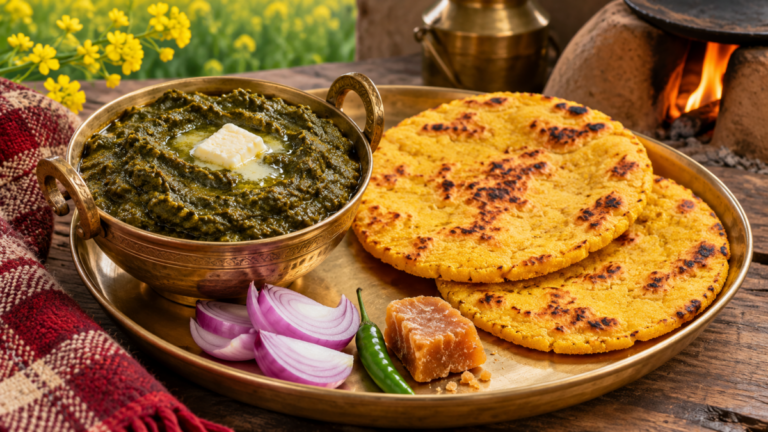
- Makki ki roti
- Wheat chapati
- Plain paratha
- Steamed rice
A glass of traditional buttermilk can also complement the meal.
Conclusion
Fresh Turmeric Curry is a wonderful example of Rajasthan’s rich culinary traditions. Its golden colour, aromatic spices, creamy texture, and distinctive flavour make it one of the most interesting winter recipes.
Prepare this authentic Rajasthani delicacy at home and enjoy a comforting seasonal meal with your family.