
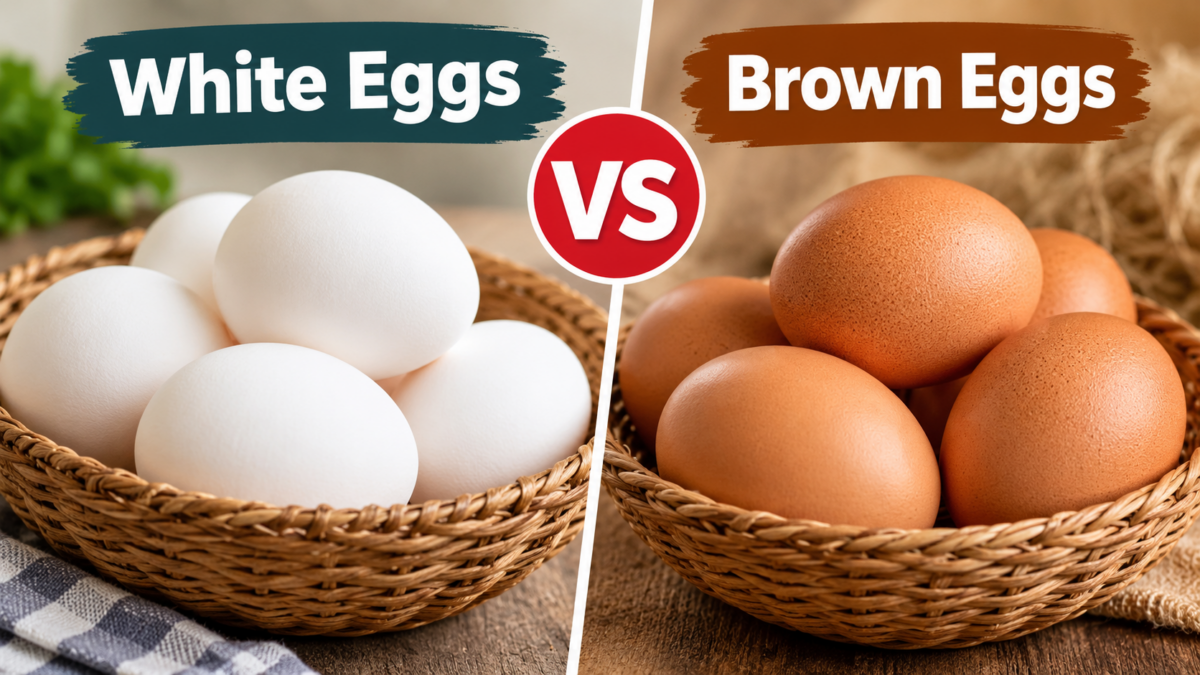
White Eggs or Brown Eggs: Eggs are one of the most popular and nutritious foods around the world. They are affordable, easy to cook, and packed with important nutrients such as protein, vitamins, minerals, and healthy fats. But when you visit a grocery store or local market, you may notice eggs with different shell colors, especially White Eggs or Brown Eggs. This often leads to a common question. Are brown eggs healthier than white eggs, or is there really no major difference?
The short answer is that shell color does not determine the nutritional quality of an egg. Both White Eggs or Brown Eggs can provide excellent nutrition. The main difference between them is generally related to the breed of the chicken that lays the egg.
White Eggs or Brown Eggs: Why Are They Different Colors?
The color of an eggshell is mainly determined by genetics. Different breeds of hens naturally produce eggs with different shell colors.
Generally, hens with white earlobes and lighter-colored feathers tend to lay white eggs, while many hens with red earlobes and darker feathers tend to lay brown eggs. However, this is a general pattern rather than a rule.
The color of the shell comes from pigments deposited during the egg-forming process. Brown eggs receive pigments that give their shells a brown or reddish appearance, while white eggs have little or no shell pigment.
Therefore, the shell color does not mean that one egg is automatically healthier, fresher, or more nutritious than the other.
Are Brown Eggs More Nutritious?
One of the most common beliefs is that brown eggs contain more nutrients than white eggs. However, experts generally agree that the color of the shell itself is not a reliable indicator of nutrition.

Both types can provide high-quality protein and nutrients including vitamin B12, riboflavin, selenium, phosphorus, and choline. Eggs also contain other beneficial nutrients, although the exact nutritional profile can vary.
What the hen eats and how it is raised can have a greater influence on some nutritional characteristics than shell color. For example, eggs from hens whose diets are specially formulated may have different levels of certain nutrients.
So, choosing a brown egg simply because it looks healthier does not necessarily mean you are getting more nutrition.
What About Taste?
Some people say brown eggs taste better than white eggs, while others cannot notice any difference. In most cases, the shell color itself does not determine taste.
Flavor can be influenced by factors such as the hen’s diet, freshness, storage conditions, and cooking method. A fresh egg may taste better than an older egg regardless of whether its shell is white or brown.
This means that if you prefer the taste of one type, it may be because of the particular brand, farm, freshness, or feeding practices rather than the color of the shell.
Are Brown Eggs More Natural?
Another misconception is that brown eggs are more natural or less processed than white eggs. The shell color is simply a natural characteristic of the chicken breed.
A brown egg is not automatically organic, free-range, or healthier. Similarly, a white egg is not automatically inferior.
If you want to know how the hens were raised or what they were fed, look at the information on the package rather than relying on shell color.

Why Are Brown Eggs Often More Expensive?
In many markets, brown eggs cost more than white eggs. This does not necessarily mean they are nutritionally superior.
The price difference can be related to the breed of hen, farming practices, production costs, packaging, marketing, or consumer demand. Some brown-egg-laying breeds are larger birds and may require more feed, which can increase production costs.
Therefore, paying more for a brown egg does not automatically mean you are buying a healthier egg.
Which Eggs Are Better for Health?
For most people, both white and brown eggs can be healthy choices.
Instead of focusing mainly on shell color, consider factors such as freshness, proper storage, food safety, the nutritional information provided on the package, and the overall quality of the eggs.
If you are choosing eggs for specific nutritional needs, such as higher omega-3 content, it is better to look for eggs specifically labeled for that nutritional characteristic rather than choosing based on shell color.
Eggs can be included as part of a balanced diet. They provide protein that helps support normal growth and maintenance of the body, along with several essential vitamins and minerals.
What About the Yolk Color?
The color of the eggshell should not be confused with the color of the yolk. You may find eggs with pale yellow yolks as well as eggs with deeper golden-orange yolks.
Yolk color is influenced largely by the hen’s diet. Foods containing certain natural pigments can make the yolk appear darker.

A darker yolk does not automatically mean that the egg is significantly healthier. Again, nutrition depends on several factors, including the hen’s diet and the production system.
Expert Opinion: Look Beyond the Shell
Nutrition experts generally emphasize that egg shell color is not an important factor when comparing the basic nutritional value of eggs.
Instead, consumers should consider the complete product. The way eggs are produced, what the hens are fed, freshness, storage, and food safety are more meaningful considerations.
It is also important to remember that nutritional differences can exist between eggs from different production systems, but those differences should not be assumed simply from whether the shell is white or brown.
White aggs or Brown Eggs: A Simple Comparison
White aggs or brown eggs are similar in several important ways. Both can provide high-quality protein, vitamins, minerals, and other nutrients. Both can be used in the same recipes, including omelets, boiled eggs, scrambled eggs, cakes, and other dishes.
The biggest obvious difference is the shell color, which comes primarily from genetics.
Brown eggs may sometimes cost more, but a higher price does not necessarily indicate better nutritional value. Likewise, white eggs are not a less nutritious choice simply because their shells are lighter.
So, Which One Should You Buy?
The best choice depends on your personal preference, budget, availability, and dietary needs.
If White Eggs or Brown Eggsare more affordable where you live, there is generally no nutritional reason to avoid them simply because they have white shells. If you prefer brown eggs, they can also be an excellent choice.

The most important point is to avoid judging an egg’s quality solely by its shell color.
White eggs or brown eggs can both be nutritious and healthy. The color of the shell mainly reflects the breed and genetics of the hen and does not, by itself, determine the egg’s nutritional value.
Rather than asking whether brown eggs are automatically better than white eggs, consumers should pay attention to freshness, proper handling, the hen’s diet, production practices, and their own nutritional requirements.
So the next time you stand in front of a shelf filled with white and brown eggs, remember: brown does not automatically mean healthier, and white does not mean inferior. For everyday nutrition, either can be a good choice when properly stored, cooked, and included as part of a balanced diet.