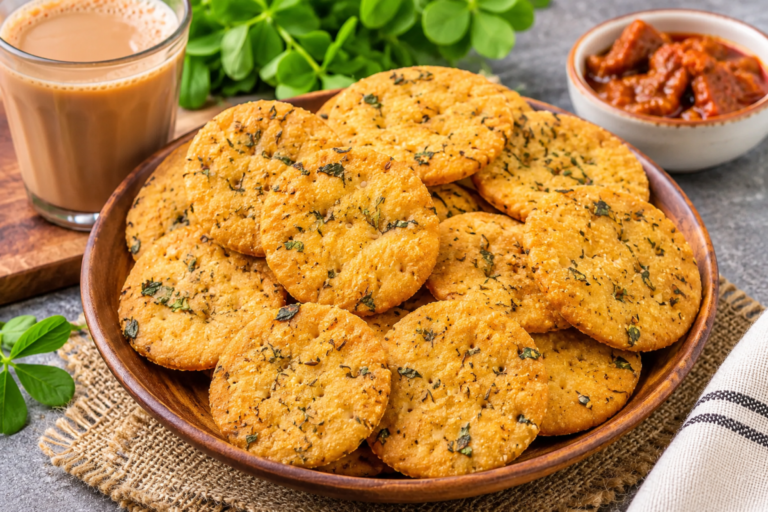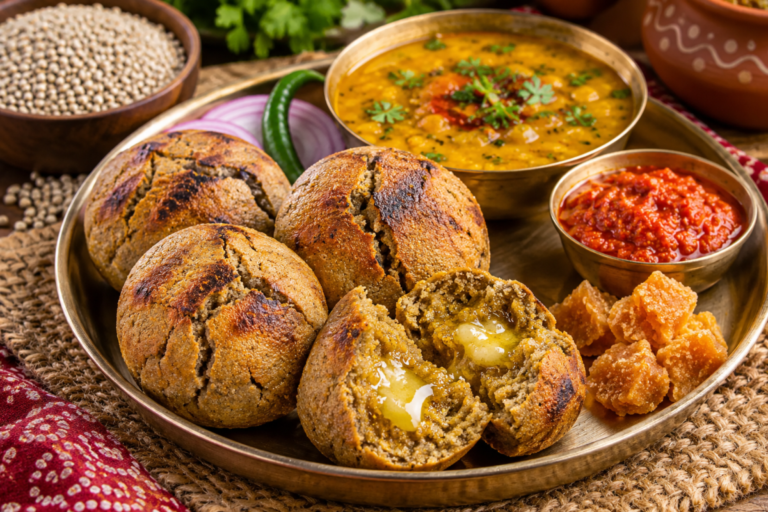
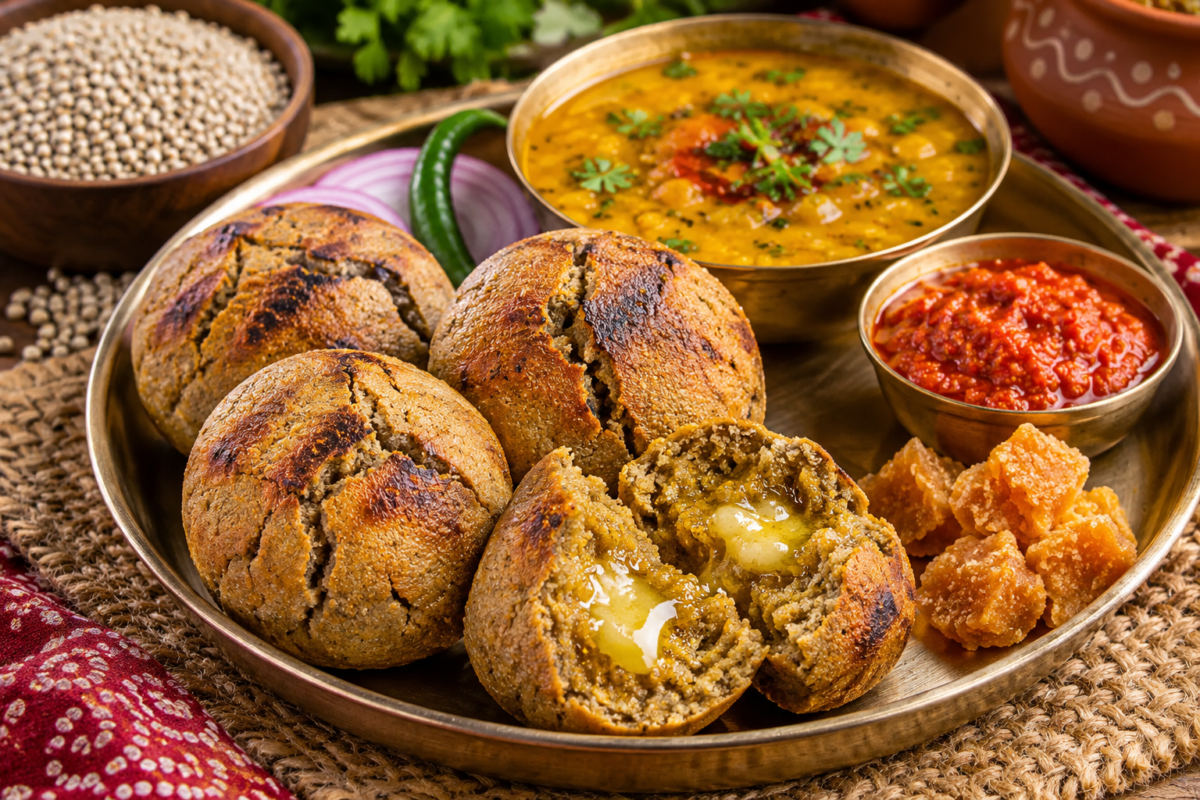
Winter is the perfect season to enjoy traditional Indian dishes made with nutritious grains. One such delicacy is Bajra Baati, a rustic Rajasthani dish prepared using pearl millet flour, desi ghee, and a few simple kitchen ingredients. Its crispy outer layer, soft interior, and earthy flavour make it a comforting addition to winter meals.
Unlike traditional wheat flour baati, bajra baati has a distinct texture and flavour. It tastes particularly delicious when served with hot dal, garlic chutney, jaggery, and melted desi ghee.
Although making bajra baati may seem difficult because pearl millet flour does not contain gluten, following the right method can help you prepare perfectly shaped and delicious baatis at home.
Ingredients Required to Make Bajra Baati
- 2 cups pearl millet flour (bajra flour)
- ¼ cup whole wheat flour (optional, for binding)
- 3 tablespoons desi ghee
- ½ teaspoon carom seeds (ajwain)
- ½ teaspoon cumin seeds
- Salt to taste
- Lukewarm water as required
- Additional melted ghee for serving
How to Make Bajra Baati at Home
Step 1: Prepare the Flour Mixture
Take a large mixing bowl and add pearl millet flour, wheat flour, carom seeds, cumin seeds, and salt. Mix all the dry ingredients thoroughly.
Add three tablespoons of desi ghee and rub it into the flour using your fingertips. This helps create a slightly crumbly mixture and improves the texture of the baati.
Step 2: Knead the Dough
Gradually add lukewarm water to the flour mixture and knead it into a firm yet manageable dough.

Pearl millet flour does not have the same elasticity as wheat flour, so avoid adding too much water at once. Knead gently until the ingredients come together.
Cover the dough and let it rest for approximately 10 minutes.
Step 3: Shape the Baatis
Divide the dough into equal portions and shape each portion into a round ball using your palms.
Gently press the centre of each ball with your thumb to create a small indentation. This helps the baatis cook more evenly.
If the edges develop small cracks, lightly moisten your hands and smooth them out.
Step 4: Bake the Baatis
Preheat your oven to 180°C. Arrange the prepared baatis on a lightly greased baking tray.
Bake them for approximately 25–35 minutes, depending on their size. Turn them halfway through cooking to ensure even browning.
The baatis should develop a firm, lightly browned outer layer and be thoroughly cooked inside.
Step 5: Add Desi Ghee
Once the baatis are cooked, remove them from the oven and gently crack them open.
Pour a little melted desi ghee over each baati while it is still warm. This enhances the flavour and adds moisture to the interior.
Your traditional homemade bajra baati is now ready to serve.
How to Make Bajra Baati Without an Oven
If you do not have an oven at home, you can prepare bajra baati in a traditional baati cooker or a heavy-bottomed covered pan fitted with a cooking stand.
Cook the baatis over low to medium heat, turning them regularly until they are evenly browned and fully cooked.
Traditional Rajasthani households also prepare baatis over hot embers, which gives them a distinctive smoky flavour.
Health Benefits of Bajra Baati
Rich in Dietary Fibre
Pearl millet contains dietary fibre, which supports digestive health and may help promote a feeling of fullness.
Provides Energy
Bajra contains complex carbohydrates that provide energy, making it a satisfying ingredient for everyday meals.
Contains Essential Minerals
Pearl millet provides important nutrients, including iron, magnesium, and phosphorus, which contribute to various bodily functions.
Naturally Gluten-Free Grain
Bajra itself is naturally gluten-free. People who avoid gluten can skip the wheat flour and prepare baatis using only pearl millet flour. Those with coeliac disease should also ensure that their ingredients are free from gluten cross-contamination.
A Nutritious Winter Food
Bajra is traditionally enjoyed during winter across Rajasthan and several other parts of India. Combining it with dal and vegetables can create a balanced and satisfying meal.
What to Serve with Bajra Baati
Bajra baati tastes best when paired with traditional Indian accompaniments such as:
- Rajasthani panchmel dal
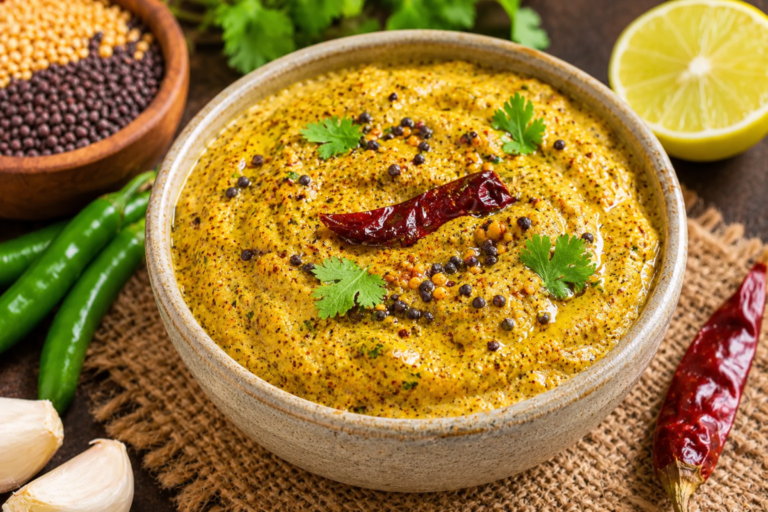
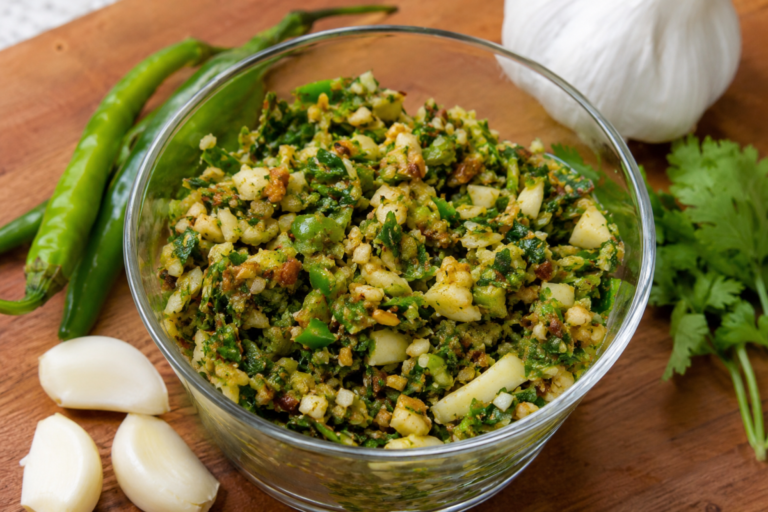
- Spicy garlic chutney
- Fresh jaggery
- Desi ghee
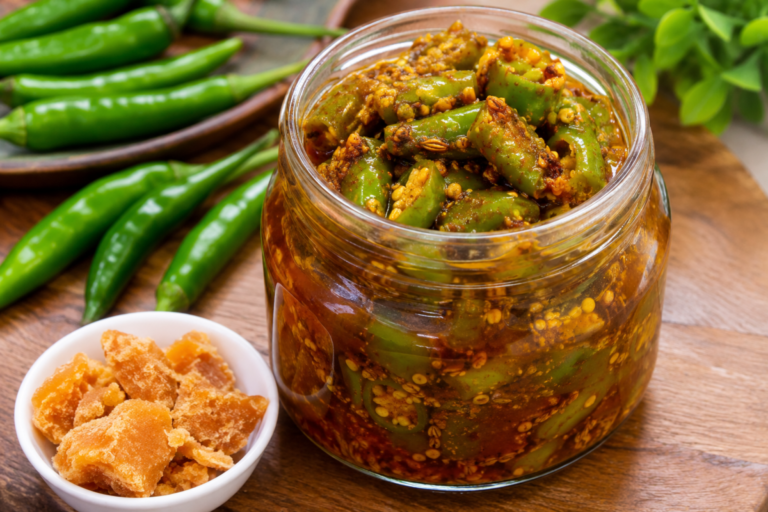
- Green chilli pickle
- Mixed vegetable curry
- Kadhi
- Fresh buttermilk
The combination of warm bajra baati, flavourful dal, and a small amount of ghee creates a wholesome meal with authentic Rajasthani flavours.
Tips to Make Perfect Bajra Baati
- Always use fresh pearl millet flour for the best flavour.
- Use lukewarm water while kneading the dough.
- Avoid making the dough excessively soft or dry.
- Make uniformly sized baatis for even cooking.
- Avoid baking at excessively high temperatures, as the outside may harden before the inside is cooked.
- Add melted ghee immediately after cooking for better flavour and texture.
- Serve the baatis fresh and warm for the best experience.
Conclusion
Bajra baati is a wonderful combination of traditional flavours, wholesome ingredients, and rustic Indian cooking. Its earthy taste makes it an excellent alternative to regular wheat baati, especially during the winter season.
With a few simple ingredients and the correct preparation technique, you can easily recreate this authentic Rajasthani delicacy in your kitchen. Serve it with hot dal, garlic chutney, and jaggery to enjoy a delicious traditional meal with your family.