Table of Contents
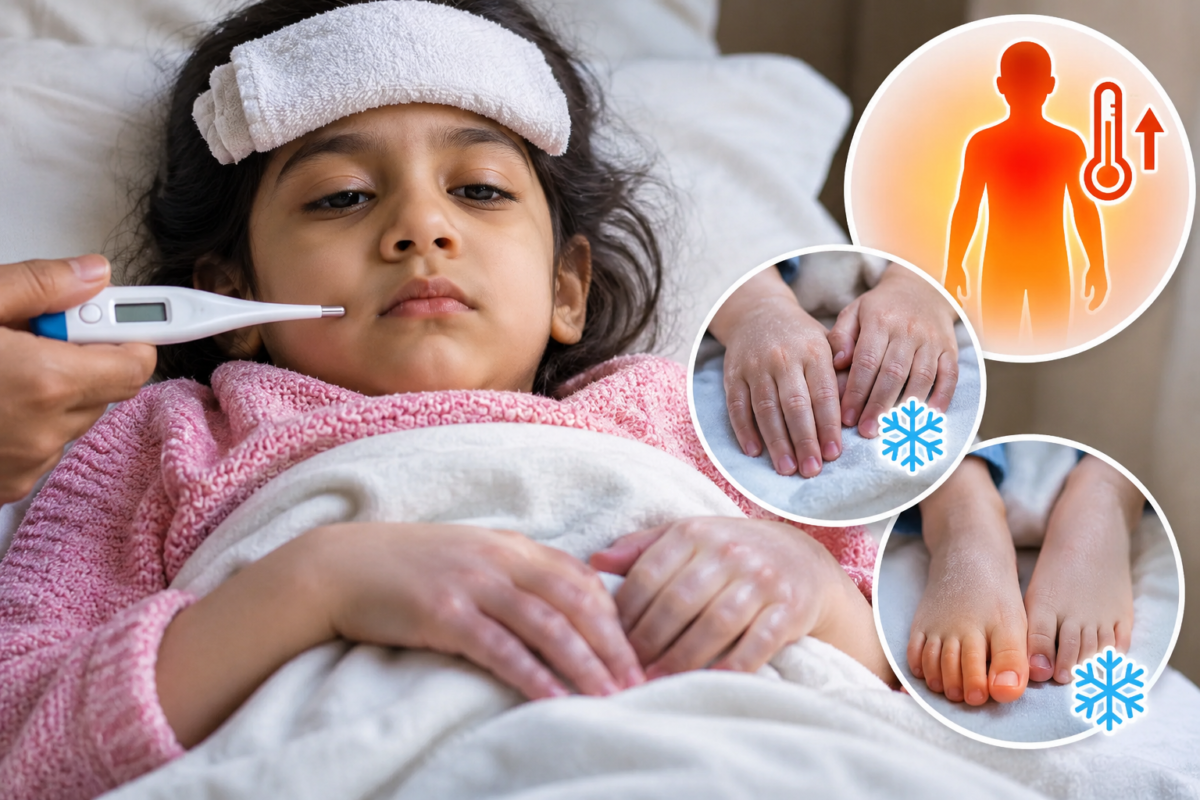
Cold Hands and Feet During Fever: Fever is one of the most common symptoms of an infection or illness. However, many people experience an unusual condition during fever in which their forehead, chest, and entire body feel hot, while their hands and feet remain cold. This situation can be confusing and concerning, especially when it occurs in babies and young children.
Although cold hands and feet can occur as part of the body’s natural response to a rising temperature, they should not always be ignored. In some cases, they may indicate a serious infection or poor blood circulation.
Understanding why this happens and recognising the warning signs can help you take the right precautions.
Why Do Hands and Feet Become Cold During Fever?
The hypothalamus, a small region in the brain, regulates body temperature. It functions like the body’s internal thermostat.
When the immune system detects an infection, it releases chemical signals that cause the hypothalamus to raise the body’s temperature setting. To reach this higher temperature, the body begins conserving heat.
During this process, blood vessels near the skin become narrower, reducing blood flow to the hands and feet. This process is medically known as vasoconstriction.

As a result, the body’s internal temperature increases while the hands and feet may temporarily feel cold.
Common Reasons for Cold Hands and Feet During Fever
1. The Body’s Natural Immune Response
When the body fights an infection, its temperature may rise as part of the immune response. During the initial stages of fever, the body reduces heat loss through the skin, which can make the extremities feel colder than usual.
2. Temporary Reduction in Blood Flow
The narrowing of blood vessels reduces the amount of warm blood reaching the fingers and toes. This creates a noticeable temperature difference between the central parts of the body and the hands and feet.
3. Chills and Shivering
Many people experience chills or uncontrollable shivering when their fever begins to rise.
Shivering generates additional body heat through repeated muscle contractions. During this phase, a person may feel cold despite having an elevated body temperature.
4. Dehydration
Fever can increase fluid loss through sweating and faster breathing. Inadequate fluid intake may contribute to dehydration, which can affect blood circulation and cause weakness, dizziness, and cold extremities.
Severe dehydration requires prompt medical attention.
5. Serious Infections
In certain cases, unusually cold hands and feet during fever may indicate a serious infection, including sepsis or meningitis.
Sepsis occurs when the body’s response to an infection causes damage to its own tissues and organs. It can affect circulation and may become life-threatening without timely medical treatment.
Why Does This Happen in Babies and Children?
Babies and young children are particularly vulnerable to complications from infections. Their temperature regulation and immune responses differ from those of adults.
While slightly cool extremities may occur as a fever rises, unusually cold hands and feet in a child with fever should be treated as a warning sign requiring immediate medical assessment.
Parents should pay close attention to their child’s breathing, feeding habits, skin colour, activity level, and urine output.
Any baby younger than three months with a temperature of 38°C or higher needs immediate medical assessment, even if there are no other obvious symptoms.
When Should You Seek Immediate Medical Attention?
Cold hands and feet accompanied by the following symptoms may indicate a medical emergency:
- Difficulty breathing or unusually rapid breathing
- Blue, grey, unusually pale, or blotchy skin
- Extremely cold or clammy hands and feet
- Confusion or loss of consciousness
- Excessive sleepiness or difficulty waking up
- Seizures
- Severe headache or neck stiffness
- Significantly reduced urination
- A rash that does not fade when pressed
- Severe weakness or rapidly worsening symptoms
Seek emergency medical care if any of these symptoms occur. Do not wait for all the warning signs to appear before seeking help.
Check the Body Temperature
Use a reliable digital thermometer to measure body temperature instead of relying solely on touching the forehead, hands, or feet.
Keep the Body Hydrated
Drink sufficient water and other suitable fluids. For infants, continue breastfeeding or formula feeding as appropriate.
Wear Comfortable Clothing
Avoid covering the body with excessively thick blankets. Lightweight, comfortable clothing can help prevent overheating.
Get Adequate Rest
Rest allows the body to recover and supports its natural immune response.
Take Medicines Carefully
Paracetamol may help relieve fever-related discomfort when taken in the correct dose. Children should receive age- and weight-appropriate medicines according to medical advice.
Never give aspirin to children unless specifically prescribed by a healthcare professional.

Avoid Ice Baths and Cold Water Sponging
Using extremely cold water or ice to reduce fever may trigger shivering and increase discomfort. Children should not be sponged down to lower their temperature.
Is Having Cold Hands and Feet During Fever Dangerous?
Temporarily cool hands and feet can occur during the early stages of fever because of changes in blood circulation. However, the seriousness of the condition cannot be determined by temperature alone.
Persistent or unusually cold extremities, particularly when accompanied by changes in skin colour, breathing difficulties, or severe weakness, should never be ignored.
Conclusion
A hot body with cold hands and feet during fever is often associated with the body’s natural temperature regulation and temporary narrowing of blood vessels. However, it can also be a warning sign of dehydration, poor circulation, or a serious infection.
Monitoring body temperature, maintaining hydration, and recognising unusual symptoms are essential. Extra caution is necessary when babies and young children develop fever, as timely medical attention can help prevent serious complications.
(Disclaimer: The information given here is based on general information. Before adopting it, definitely take medical advice. THE MONK does not confirm this.)