Table of Contents
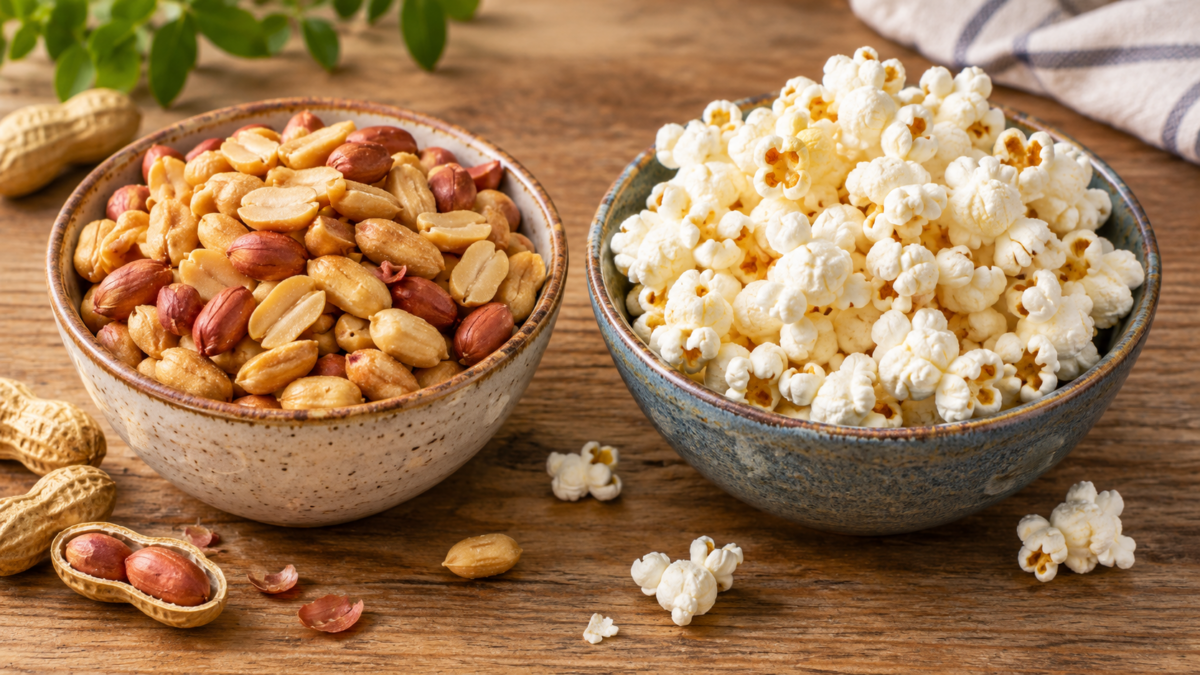
Peanuts and Popcorn: Choosing the right snack can make a significant difference when it comes to managing blood sugar levels. Peanuts and popcorn are two popular and affordable snacks enjoyed by people around the world. While both offer nutritional benefits, their effects on blood glucose can be quite different.
When comparing peanuts and popcorn, factors such as carbohydrate content, protein, dietary fibre, healthy fats and portion size play an important role. Understanding these differences can help you make healthier snacking choices.
Peanuts and Popcorn: Nutritional Comparison
Here is an approximate nutritional comparison between dry-roasted, unsalted peanuts and air-popped popcorn.
| Nutrient | Peanuts (28 g) | Popcorn (3 cups) |
| Calories | 166 | 93 |
| Carbohydrates | 6 g | 18.7 g |
| Protein | 6.9 g | 3.1 g |
| Fibre | 2.4 g | 3.5 g |
| Fat | 14.1 g | 1.1 g |
Peanuts contain fewer carbohydrates and more protein, while popcorn provides fewer calories and more fibre per typical serving.
Why Are Peanuts Good for Blood Sugar?
Peanuts contain plant-based protein, fibre and healthy unsaturated fats. This combination makes them a useful snack for people looking to manage their blood sugar levels.

1. Lower Carbohydrate Content
Peanuts contain relatively few carbohydrates, which means a moderate serving is generally less likely to cause a significant rise in blood sugar than a larger carbohydrate-rich snack.
2. Rich in Healthy Fats
The unsaturated fats found in peanuts can support heart health when consumed as part of a balanced diet.
3. Help Control Hunger
The combination of protein, fibre and fat in peanuts promotes feelings of fullness. This may help reduce unnecessary snacking and overeating between meals.
4. Provide Essential Minerals
Peanuts contain magnesium, phosphorus and other nutrients that support normal metabolic functions and overall health.
Is Popcorn Good for Blood Sugar?
Popcorn is a natural whole-grain food that can be a healthy snack when prepared without excessive butter, salt or sugar.
1. Contains Dietary Fibre
Popcorn provides fibre, which supports digestive health and can help moderate the body’s absorption of carbohydrates.

2. Low in Calories
Plain, air-popped popcorn is relatively low in calories, making it an attractive option for people trying to manage their weight.
3. Provides Whole-Grain Nutrition
Unlike many processed snack foods, plain popcorn contains the entire corn kernel. Whole grains can be part of a balanced, diabetes-friendly diet.
However, popcorn contains more carbohydrates than peanuts. Eating a large portion or choosing caramel-coated popcorn can increase its impact on blood sugar.
Peanuts and Popcorn: Which Is Better for Diabetes?
Peanuts generally have an advantage when it comes to limiting the rise in blood sugar after snacking. Their lower carbohydrate content and higher amounts of protein and fat make them a suitable option for many people with diabetes.
However, this does not mean popcorn should be completely avoided. A controlled portion of air-popped popcorn can also fit into a healthy diabetes meal plan.
The key is to pay attention to portion sizes, preparation methods and individual blood glucose responses.

Which Snack Is Better for Weight Loss?
Popcorn may have an advantage for people looking to reduce their calorie intake. Three cups of air-popped popcorn contain approximately 93 calories, providing a satisfying volume of food without excessive calories.
Peanuts, on the other hand, are more calorie-dense but may help control hunger for longer because of their protein and healthy fat content.
Both snacks can support weight management when eaten in appropriate portions.
Healthy Ways to Enjoy Peanuts and Popcorn
To maximise their nutritional benefits, follow these simple tips:
- Choose dry-roasted, unsalted peanuts.
- Avoid sugar-coated and deep-fried peanuts.
- Prepare popcorn at home using minimal oil.
- Avoid caramel popcorn and excessive butter.
- Measure your portions before eating.
- Combine a small serving of peanuts with plain popcorn for a balanced snack.
How Much Should You Eat?
A small handful of peanuts, approximately 28 grams, is a reasonable snack portion for many adults.
For popcorn, around two to three cups of plain, air-popped popcorn can be a suitable serving, depending on individual dietary needs and carbohydrate limits.

People with diabetes should monitor how different snacks affect their blood glucose and follow their healthcare professional’s dietary recommendations.
Conclusion
In the peanuts and popcorn comparison, peanuts are generally the better choice for limiting blood sugar spikes, while air-popped popcorn is an excellent lower-calorie alternative. Both snacks provide valuable nutrients and can be included in a healthy diet.
Choosing natural, minimally processed varieties and practising portion control can help you enjoy these delicious snacks without compromising your health.