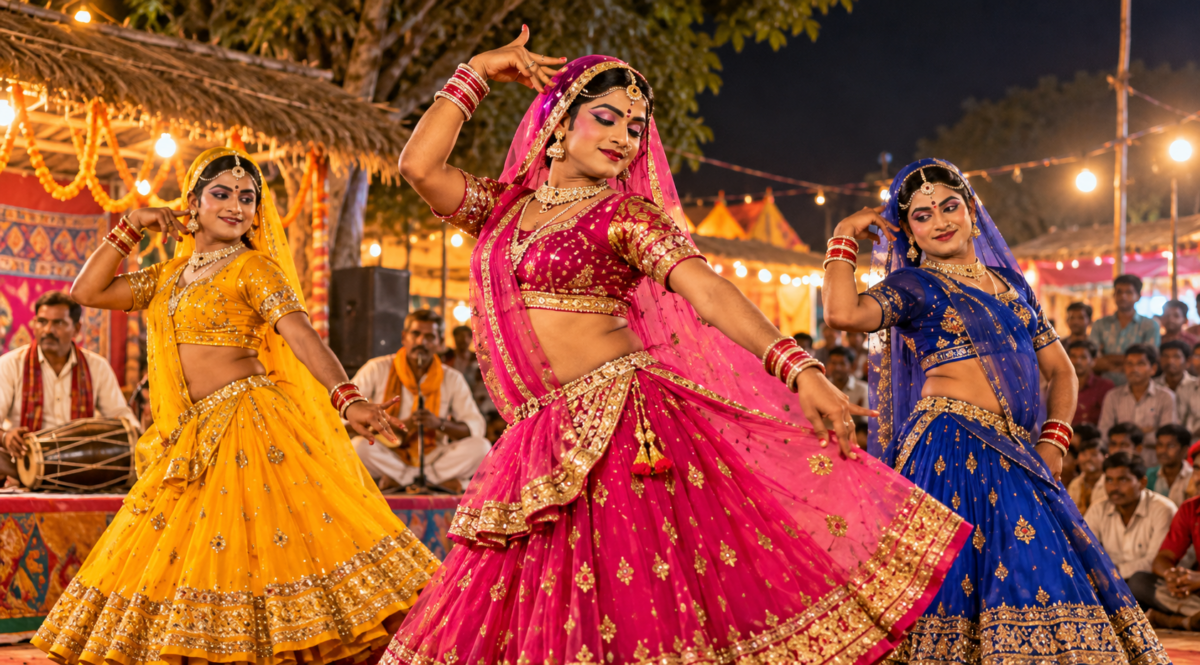
Bihar Launda Naach Tradition: At first glance, it looks like a graceful woman dancing on stage in a colorful lehenga-choli. The audience claps to the rhythm of traditional Bhojpuri songs, mesmerized by every expression and dance move. But then comes the biggest surprise—the performer is actually a man. This unique folk tradition, known as Launda Naach, has been a part of Bihar’s LG cultural identity for centuries. But why do men dress as women and perform this dance? The answer lies in history, social customs, and a tradition that refused to disappear.
What Is Launda Naach? Exploring Bihar’s Traditional Folk Dance Culture
Bihar Launda Naach Traditionl folk dance that originated in the Bhojpur region of Bihar and later spread to parts of eastern Uttar Pradesh and Jharkhand. In this art form, male performers wear women’s attire, including lehenga-choli, jewelry, makeup, and wigs, to portray female characters through dance, music, and acting.
For generations, Launda Naach has been one of the biggest attractions at weddings, village fairs, festivals, and other social celebrations. The performances combine humor, singing, storytelling, and energetic dance, making them popular among rural audiences.

Why Do Men Perform as Women?
The roots of this tradition go back to a time when women were generally not allowed to perform in public. Social customs and strict gender norms prevented women from dancing on stage, especially at public gatherings and wedding celebrations.
To keep entertainment alive, talented male artists began playing female roles by dressing as women. Over time, these performers mastered feminine expressions, gestures, and dance styles so convincingly that Bihar Launda Naach Tradition became a respected folk performance rather than just an imitation.
Is It Really Connected to the Mughal Era?
Many people believe the tradition became more common during the Mughal period, when women from respectable families rarely appeared in public cultural performances. While there is no conclusive historical evidence proving that the Mughals started Launda Naach, historians agree that social restrictions on women’s public performances played an important role in the growth of male performers portraying female characters.

So, although the art form is often linked with the Mughal era, its evolution was influenced more by social customs than by any single ruler or dynasty.
Bhikhari Thakur’s Contribution
Bihar Launda Naach Tradition No discussion about Launda Naach is complete without mentioning Bhikhari Thakur, often called the “Shakespeare of Bhojpuri.” During the early 20th century, he transformed Launda Naach into a powerful medium of social awareness.
Through famous plays such as Bidesiya, he highlighted issues like migration, child marriage, dowry, caste discrimination, and women’s struggles. His performances entertained audiences while also encouraging them to think about social reform. Because of his efforts, Launda Naach gained recognition as a meaningful form of folk theatre rather than simple entertainment.

More Than Just Dance
Launda Naach is not limited to dancing. A typical performance includes:
- Traditional Bhojpuri folk songs
- Comic dialogues and satire
- Dramatic storytelling
- Emotional acting
- Audience interaction
Challenges in Modern Times
This combination makes every performance lively and unique.
With television, films, social media, and DJs becoming common at weddings, the popularity of traditional folk performances has declined. Many experienced Launda Naach artists struggle to find regular work, and younger generations are less interested in learning the art.

Despite these challenges, cultural festivals, researchers, and folk art enthusiasts continue to promote and preserve this unique tradition.
A Living Heritage of Bihar
Bihar Launda Naach Tradition is much more than men wearing women’s clothes. It reflects the history of a society where performers adapted to social restrictions and turned them into a vibrant artistic tradition. Today, it stands as a symbol of Bihar’s rich folk heritage, reminding us that culture evolves with time while preserving the stories of the past.
The next time you see a man dressed in a lehenga-choli performing on stage, remember that you are witnessing not just a dance, but a centuries-old tradition that carries the spirit, creativity, and cultural legacy of Bihar.