Tulsi Vivah is one of the most sacred and beautiful festivals in Hindu tradition. It celebrates the symbolic marriage of Goddess Tulsi, represented by the holy basil plant, with Lord Vishnu in the form of Shaligram or Lord Krishna. This festival represents devotion, purity, love, and the beginning of the traditional Hindu wedding season.
Tulsi Vivah is especially celebrated in northern and western India, including Uttar Pradesh, Bihar, Rajasthan, Gujarat, and Maharashtra. Families decorate the Tulsi plant like a bride and perform wedding rituals with prayers, devotional songs, flowers, and traditional offerings.
1. Tulsi Vivah 2026 Date and Puja Muhurat
In 2026, Tulsi Vivah will be celebrated on Saturday, November 21, 2026.
According to the Hindu calendar, the festival generally takes place on Kartik Shukla Dwadashi, following Dev Uthani Ekadashi.
Important Dates:
- Tulsi Vivah Date: November 21, 2026
- Day: Saturday
- Dwadashi Tithi Begins: November 21 at 6:31 AM
- Dwadashi Tithi Ends: November 22 at 4:56 AM
These tithi timings are based on the New Delhi Panchang. The exact auspicious worship time depends on the location.
In some communities, Tulsi Vivah is performed on Dev Uthani Ekadashi, while others celebrate it between Ekadashi and Kartik Purnima.
2. History and Origin of Tulsi Vivah
Tulsi Vivah has its origins in ancient Hindu religious traditions.
According to Hindu beliefs, the Tulsi plant represents Goddess Tulsi, who is deeply connected with Lord Vishnu.
The festival symbolizes a sacred union between divine devotion and protection.
Tulsi is considered an especially sacred plant in Hindu households. Many devotees worship it daily, light lamps near it, and offer prayers for peace and prosperity.
The marriage ceremony also marks the beginning of an auspicious period for traditional Hindu weddings in many communities.
3. The Sacred Story of Tulsi and Lord Vishnu
One of the most popular legends associated with Tulsi Vivah is the story of Vrinda and Jalandhara.
According to Hindu mythology, Vrinda was a deeply devoted woman and the wife of the powerful demon king Jalandhara.
Her unwavering devotion was believed to protect her husband and make him extremely powerful.
When Jalandhara became a threat to the gods, Lord Vishnu intervened. According to one traditional version of the legend, Vishnu assumed Jalandhara’s appearance, causing Vrinda’s protective spiritual power to be broken.
After discovering the deception, Vrinda cursed Lord Vishnu to become a stone.
Lord Vishnu later became associated with the sacred Shaligram stone, while Vrinda became the holy Tulsi plant.
According to religious tradition, Lord Vishnu promised that Tulsi would always hold a special place in his worship.
The symbolic marriage of Tulsi and Shaligram commemorates this sacred relationship.
Different Hindu texts and regional traditions narrate the story with variations.
4. Religious Significance of Tulsi Vivah
Tulsi Vivah holds deep spiritual importance for Hindu devotees.
Symbol of Pure Devotion: The festival represents dedication, faith, and the sacred relationship between devotees and the divine.
Blessings for Married Life: Married couples traditionally pray for harmony, happiness, and a prosperous family life.
Importance for Unmarried Devotees: Some devotees believe that performing Tulsi Vivah brings blessings for a suitable marriage.
Beginning of Wedding Season: In many Hindu communities, wedding ceremonies resume after the traditional Chaturmas period.
Respect for Nature: The festival also highlights the cultural importance of plants and their protection.

These are religious and cultural beliefs that have been passed down through generations.
5. Tulsi Vivah Puja Vidhi: Step-by-Step Guide
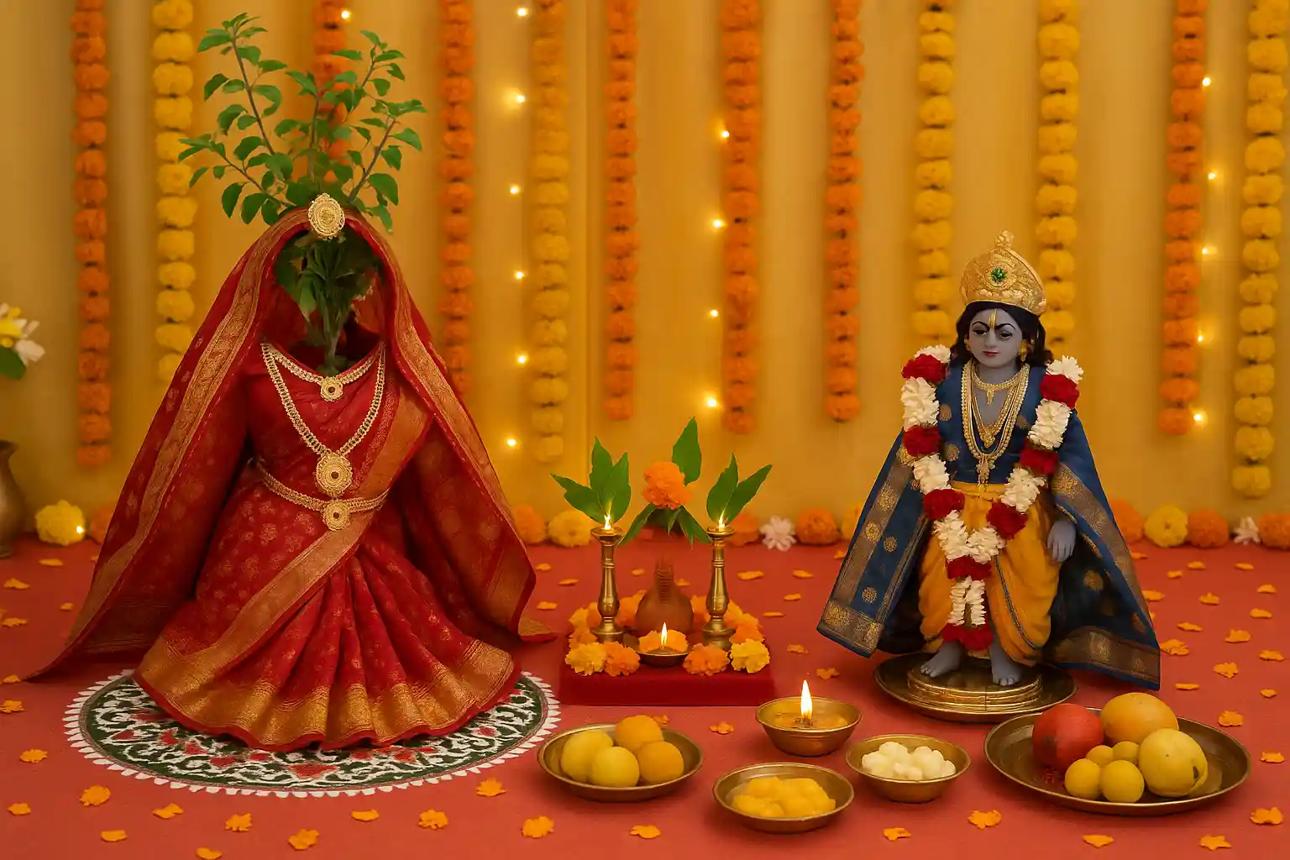
Families perform Tulsi Vivah with great devotion, following customs similar to a traditional Hindu wedding.
Step 1: Clean the Worship Area
Clean the courtyard or place where the Tulsi plant is kept. Decorate the surroundings with rangoli, flowers, and earthen lamps.
Step 2: Decorate the Tulsi Plant
Dress the Tulsi plant with a red or yellow chunri. Some families also use bangles, flowers, and symbolic bridal ornaments.
Step 3: Prepare the Wedding Mandap
Create a small decorated mandap around the Tulsi plant, traditionally using sugarcane stalks and flowers.
Step 4: Place Lord Vishnu or Shaligram
Place a Shaligram stone or an idol of Lord Vishnu or Krishna near the Tulsi plant.
Step 5: Perform the Marriage Ritual
Offer flowers, sandalwood, incense, lamps, and traditional prasad. Family members recite prayers and perform symbolic marriage rituals.
Step 6: Perform Aarti
Complete the ceremony with aarti, devotional songs, and prayers for family happiness.
Step 7: Distribute Prasad

After worship, distribute sweets, fruits, and other offerings among family members and neighbours.
6. Essential Tulsi Vivah Puja Samagri
Common worship materials include:
- Tulsi plant and Shaligram stone or Vishnu idol
- Red or yellow chunri
- Flowers and garlands
- Sugarcane stalks
- Diya, incense, and ghee
- Roli, turmeric, and sandalwood
- Fruits, sweets, and traditional prasad
- Rice, water, and a puja thali
The materials may differ depending on regional and family traditions.
7. Why Is the Tulsi Plant Considered Sacred?
The Tulsi plant holds an important place in Hindu religious life.
It is associated with purity, devotion, and the blessings of Lord Vishnu.
Many Hindu families traditionally grow Tulsi in their courtyards and offer water and prayers to it.
Tulsi, also known as holy basil, is additionally valued as an aromatic herb and has a history of use in traditional wellness practices.
However, religious beliefs about Tulsi should be distinguished from scientifically established medical benefits.
8. How Is Tulsi Vivah Celebrated Across India?
Tulsi Vivah celebrations vary across different regions.
In Uttar Pradesh and Bihar, families often organize ceremonies at home with traditional songs and offerings.
In Maharashtra, Tulsi Vivah is commonly celebrated with decorated Tulsi Vrindavans and sugarcane mandaps.
In Gujarat and Rajasthan, families perform traditional wedding customs and worship Lord Vishnu.
Despite regional differences, the central message remains the same: devotion, gratitude, family unity, and spiritual purity.
Conclusion
Tulsi Vivah 2026, celebrated on November 21, is a meaningful Hindu festival that beautifully combines mythology, religious devotion, and family traditions.
The sacred marriage of Tulsi and Lord Vishnu reminds devotees of faith, dedication, and the importance of maintaining harmony in life.
Through traditional prayers, colourful decorations, and symbolic wedding rituals, Tulsi Vivah continues to preserve India’s rich spiritual heritage.
May Goddess Tulsi and Lord Vishnu bless every family with happiness, peace, prosperity, and harmony. Happy Tulsi Vivah 2026!