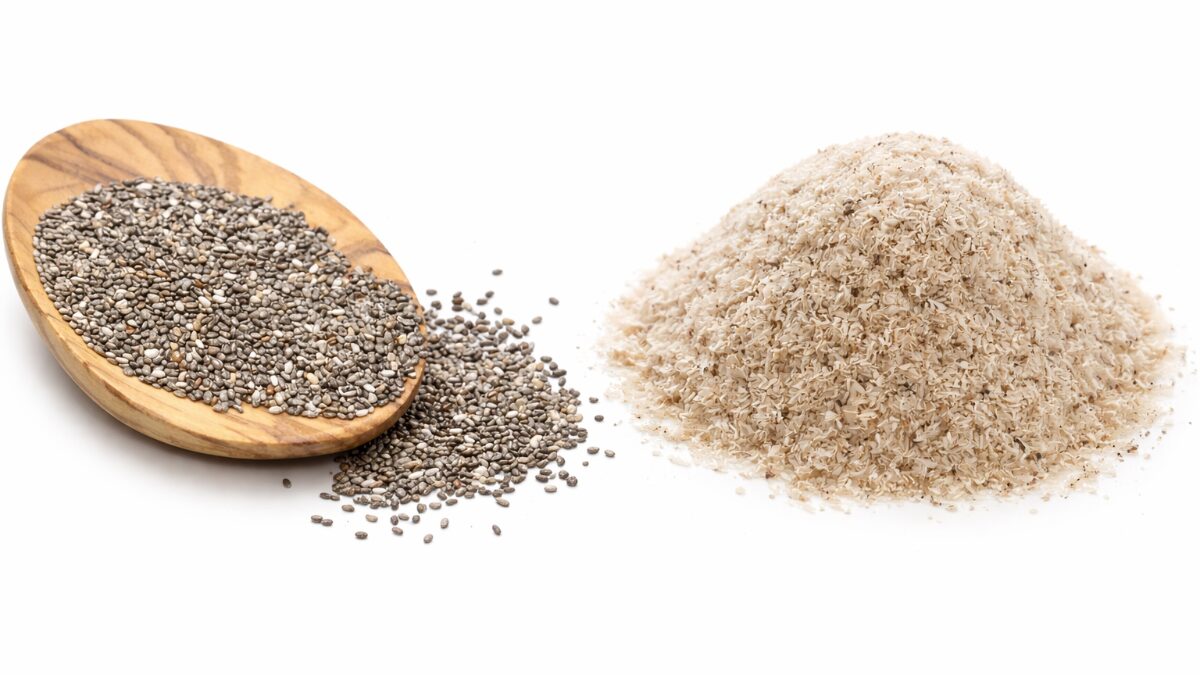
Chia Seeds And Lsabgol: When it comes to digestive health, two names often top the list of natural remedies: chia seeds and isabgol (psyllium husk). Both are praised as “superfoods,” both are rich in fiber, and both are known to support gut health. But a common question remains—which one provides more fiber, and which is better for maintaining smooth digestion?
Here is an in-depth, clear, and practical comparison to help you choose the right one for your needs.
Understanding Fiber Why It Matters
Before comparing the two, it’s important to understand why fiber plays such a crucial role in digestion.
Dietary fiber adds bulk to stools, supports regular bowel movements, feeds healthy gut bacteria, prevents constipation, and even helps control appetite and blood sugar levels.

Fiber comes in two types
- Soluble fiber: Absorbs water, forming a gel-like substance that eases digestion.
- Insoluble fiber: Adds bulk and helps food pass more smoothly through the digestive tract.
Both chia seeds and isabgol contain a blend of soluble and insoluble fiber—but in very different proportions.
Fiber Content Who Wins the Numbers Game?
Chia Seeds And Lsabgol
1. Chia Seeds
Chia seeds are tiny but powerful. They contain approximately.
- 34–35 grams of fiber per 100 grams
Their fiber content is balanced between soluble and insoluble types. When soaked, chia seeds absorb 10–12 times their weight in water, forming a gel that is gentle on the digestive system. This gel slows digestion slightly (in a healthy way), supports steady energy release, and encourages smoother bowel movements.
2. Isabgol (Psyllium Husk)
Isabgol is the undisputed heavyweight champion of fiber. It contains:

- 80–85 grams of fiber per 100 grams
That’s more than double the fiber found in chia seeds. Most of this is soluble fiber, which means that when mixed with water, it forms a thick gel that moves through the intestines, softening stools and relieving constipation effectively.
Conclusion on Fiber Content
Isabgol clearly has more fiber than chia seeds—more than twice as much.
Digestive Benefits: Which Works Better?
Isabgol Best for Digestive Relief
Isabgol is especially effective when digestion is already disturbed. It is widely used in Indian households for.

- Constipation
- Acidity
- IBS symptoms
- Irregular bowel movements
- Hard stools
- Post-heavy-meal discomfort
Its strong soluble fiber content draws water into the gut, softening stools and making them easier to pass. It works quickly—often within a few hours—and is gentle enough for daily use when needed.
Chia Seeds: Best for Daily Digestive Support
Chia seeds are not as medicinal as isabgol, but they excel at everyday gut maintenance. Chia Seeds And Lsabgol Their moderate fiber content, combined with omega-3 fatty acids, protein, and antioxidants, helps.
- Improve overall digestion
- Maintain regular bowel habits
- Support weight management
- Reduce inflammation
- Support healthy gut flora
Because chia seeds also provide many other nutrients, they function as a nutritious food rather than just a digestive remedy.
Which One Should You Choose?
Choose Chia Seeds If
- You want a daily fiber-rich food to maintain long-term digestive health..You prefer getting fiber along with nutrients like calcium, protein, and omega-3s.
- You’re trying to manage weight or increase energy levels.
- You enjoy adding seeds to smoothies, salads, oatmeal, or lemon water.
Choose Isabgol If
- You are experiencing constipation or sluggish digestion.
- Your gut needs immediate relief or calming.
- You prefer a low-calorie, pure-fiber supplement.
- You want something mild, safe, and effective for digestion-related discomfort.
How to Consume Them Correctly
How to Use Chia Seeds
- 1 tablespoon daily is enough.
- Always soak them for 20–60 minutes (or overnight) before consuming.
- Add to.
- Water or lime water
- Oatmeal
- Smoothies
- Yogurt
- Salads
How to Use Isabgol
- 1–2 teaspoons mixed in warm water or milk.
- Drink immediately before it thickens.
- Best taken before bedtime for constipation relief.
Can You Take Both?
Yes—but not at the same time.
Chia seeds can be used in the morning as part of breakfast, while isabgol can be taken at night if needed for relief. Many nutritionists recommend this combination because it balances nutritional benefits with digestive support.
Final Verdict: Who Keeps Digestion “Chakachak”?
- Isabgol is the better choice for quick relief, constipation, acidity, and digestive issues.
- Chia seeds are better for long-term digestive health, nutrition, and overall wellness.
If your goal is maximum fiber, isabgol wins without doubt.
If your goal is better general health, chia seeds are the smarter choice.
Chia Seeds And Lsabgol, Both are excellent—but for different reasons. The right choice depends on whether you want daily nourishment or targeted digestive relief.