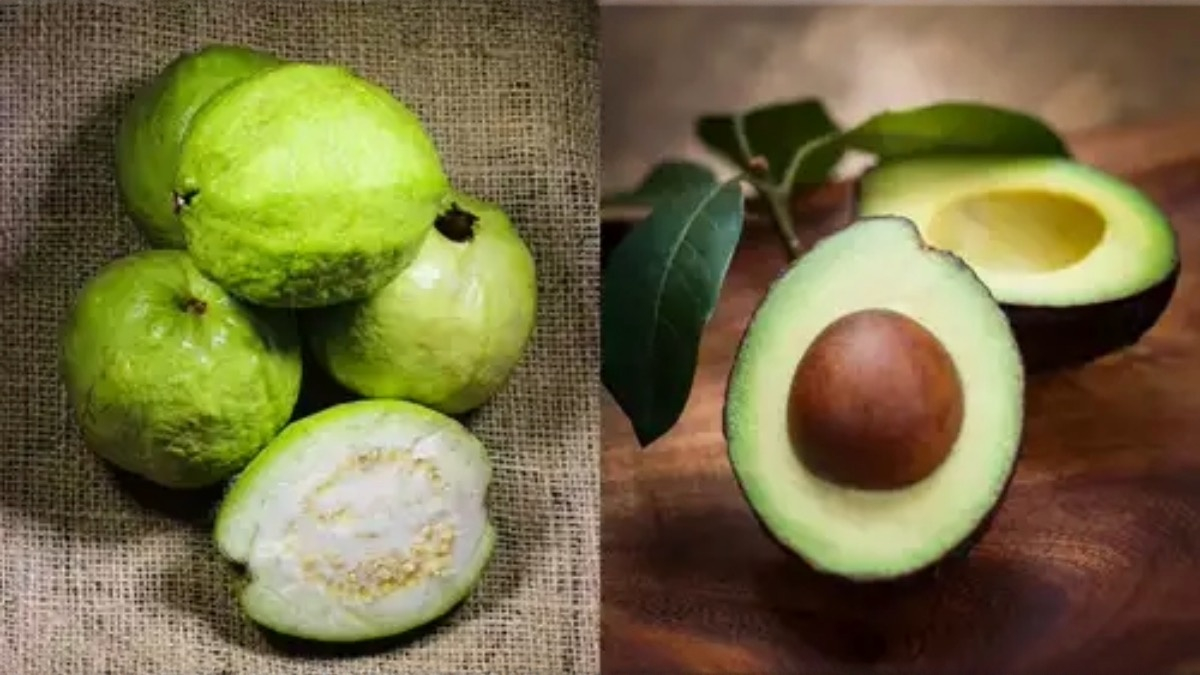
Guava vs Avocado: In the world of superfoods, guava and avocado are two fruits that often go unnoticed despite being packed with incredible health benefits. While guava is known for its high vitamin C content and fiber, avocado stands out for its healthy fats and creamy texture. But when it comes to choosing the healthier option, which one wins? Let’s compare their nutritional profiles, benefits, and the right way to include them in your diet.
Guava – The Fiber & Vitamin C Powerhouse
Guava is a tropical fruit that’s low in calories but rich in nutrients. A single medium-sized guava (about 250g) contains.
- Vitamin C: Over 250 mg (more than 4x the daily requirement)
- Fiber: Around 9g – excellent for digestion
- Potassium: Helps regulate blood pressure
- Antioxidants: Including lycopene and flavonoids
Health Benefits of Guava
- Boosts Immunity: The high vitamin C content strengthens the immune system.
- Improves Digestion: The rich fiber content prevents constipation and supports gut health.
- Controls Blood Sugar: Guava has a low glycemic index, making it great for diabetics.
- Skin Glow: Antioxidants help reduce wrinkles and improve skin texture.
Best Way to Consume Guava.
- Eat it raw with the peel (if it’s clean and tender)
- Make a juice or smoothie without sugar
- Add to fruit salads for a refreshing twist
- Use in chutneys or as a topping on yogurt
Avocado – The Healthy Fat Hero
Avocados are technically a berry and offer a unique nutritional profile with high levels of heart-healthy monounsaturated fats. One medium avocado (150g) contains:

- Healthy Fats: 21g of mostly monounsaturated fat
- Fiber: 10g – excellent for satiety
- Vitamin E: Good for skin and eyes
- Potassium: Even more than bananas
Health Benefits of Avocado
- Good for the Heart: The fats help lower bad cholesterol (LDL) and increase good cholesterol (HDL).
- Supports Brain Health: Rich in omega-9 fats and vitamin E.
- Weight Management: Helps you feel fuller for longer, reducing overeating.
- Improves Nutrient Absorption: Fat-soluble vitamins (A, D, E, K) absorb better when eaten with avocado.
Best Way to Consume Avocado
- Spread it on whole grain toast with a sprinkle of salt and lemon
- Blend into smoothies for a creamy texture
- Add to salads or grain bowls
- Mash with spices to make guacamole
Guava vs Avocado: Which One Wins?
| Criteria | Guava | Avocado |
| Calories (per 100g) | ~68 | ~160 |
| Fat Content | Very Low (~1g) | High (~15g), mostly healthy fats |
| Fiber | High (~5g) | Very High (~6-7g) |
| Vitamin C | Extremely High | Low |
| Potassium | Moderate | Very High |
| Glycemic Index | Low (Good for Diabetics) | Low (Good for Diabetics) |
Guava vs Avocado, Both fruits offer amazing health benefits, but their strengths lie in different areas. If you’re looking for low-calorie, immune-boosting, high-fiber nutrition, guava is your best bet. If your goal is to boost healthy fats, support heart and brain health, and feel fuller longer, then avocado is the winner.
Ideally, include both in your diet. Guava in the morning can kickstart your day with vitamin C and fiber, while avocado in the afternoon or evening can help balance your fats and keep you satisfied.
Final Tip
Always go for ripe, fresh fruits. And if you’re watching your calorie intake, portion control with avocado is essential, while guava can be eaten more freely due to its low fat and calorie count.

(Disclaimer: The information given here is based on general information. Before adopting it, definitely take medical advice. THE MONK does not confirm this.)